
Cheek Fillers
Cheek Volume, Restored With Precision
Cheek volume starts to fade in your late twenties. The change reads as flatness across the midface, shadows under the eyes, and a tired look that sleep doesn’t fix. At Aesthetic Dermatology Associates, board-certified dermatologists rebuild that lost structure with fillers built for the cheek, restoring contour that looks like it was always there.

Why Choose a Dermatologist for Cheek Fillers?
Cheek augmentation sits closer to bone, major vessels, and structural fat compartments than almost any other filler treatment on the face. The facial artery runs through this region, and an injector without deep anatomical training can compromise it. A dermatologist who treats this area daily brings a different level of scrutiny to a treatment that carries real stakes.
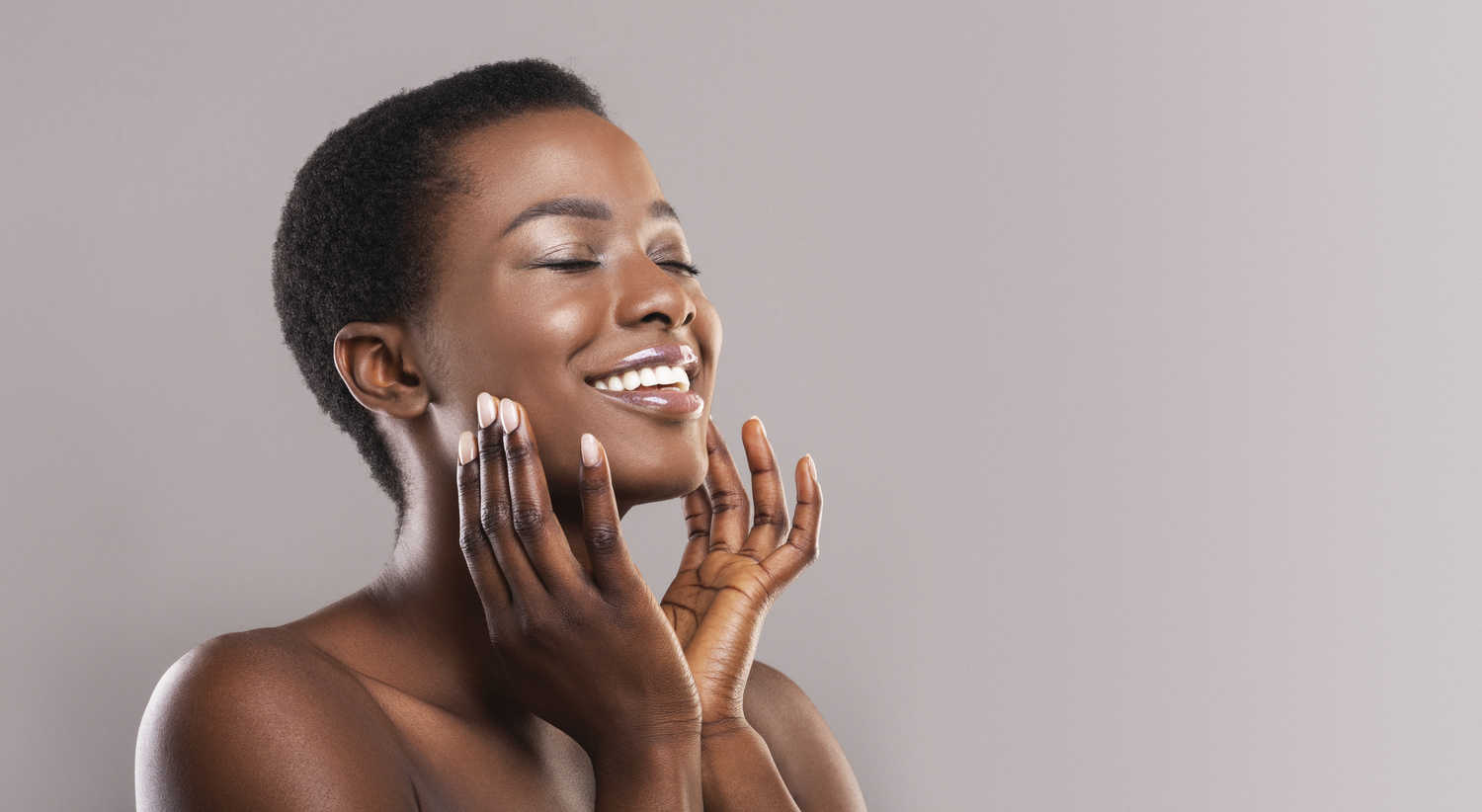
Face lifting concept. Happy black woman with closed eyes touching soft smooth skin on her cheeks over grey background, panorama
Medical spas offer cheek fillers too, often through nurses or aestheticians working without a physician on site. At Aesthetic Dermatology Associates, a board-certified dermatologist performs or directly supervises every cheek filler treatment. Three things follow from that:
- Anatomical precision: Cheek filler is injected deep, often against the periosteum, in a region crossed by the facial artery and its branches. Knowing where those vessels run, and adjusting technique accordingly, takes formal training.
- Complication management: Vascular occlusion carries higher stakes in the cheek than in most other filler sites, including rare but serious risk to skin and vision. A dermatologist recognizes the early signs and keeps hyaluronidase on hand to reverse a problem within minutes.
- Structural judgment: Rebuilding a cheek convincingly takes an understanding of bone structure, fat pad position, and how the midface ages, not just where to place a needle. That judgment separates a natural lift from a face that looks overfilled.
What Is Cheek Filler, and How Does It Work?
Cheek filler is a thicker, firmer hyaluronic acid gel built to hold structure rather than spread softly. Products like Juvéderm Voluma XC and Restylane Lyft carry a higher G-prime than fillers made for lips or fine lines, so they resist movement and support tissue the way bone normally does. In certain cases, we use Radiesse, a calcium hydroxylapatite filler that stimulates the body’s own collagen production over time.
Which product we use depends on your skin thickness, how much lift you need, and the result you want. Thin skin generally calls for a softer product placed near the surface; significant volume loss calls for a denser filler placed deep against bone. We make that call during your consultation, not before.
Cheeks flatten for a reason that has nothing to do with skincare: the fat pads in the midface shrink and drop with age, and the bone beneath them resorbs along with them. That one change drives several things patients notice separately — hollow under-eyes, deeper nasolabial folds, early jowling — without realizing they share a single cause. Restoring cheek volume often improves all three at once.
Results show up the moment swelling settles. Because the cheek moves far less than the mouth, filler placed here tends to last longer than lip filler, usually 12 to 18 months. Like other HA-based fillers, it can be dissolved with hyaluronidase if your goals change.
What Cheek Fillers Can Address
Cheek treatment isn’t one fix for one complaint. Patients arrive for several different reasons, and the right approach depends on which one applies to you.
Flattening and Volume Loss
This is the most common reason patients seek cheek filler: a face that reads as thinner or more tired than it used to, even without much weight change. Filler placed at the right depth rebuilds the projection that bone and fat once provided.
Cheekbone Definition
Some patients want more structure, not less aging. Placement along the high points of the cheekbone sharpens the angle from the side and adds contour that shows up in photos and changes how the rest of the face reads.
Midface Support for Under-Eye Hollows and Nasolabial Folds
The cheek sits directly above both the tear trough and the nasolabial fold, so restoring volume here often lifts tissue that has dropped into those areas. Many patients notice softer under-eye shadows and shallower smile lines after cheek treatment alone, with no injection placed near the eye itself.
Asymmetry
Few faces are perfectly even, and the cheeks are no exception. One side may carry less volume than the other from natural anatomy, prior injury, or uneven aging. Filler corrects that gap directly, building up the lower side rather than trying to reduce the higher one.
Treatment Approaches for Cheek Augmentation
How filler is placed changes the result as much as the product itself.
Structural Support
Deep injection, often against the periosteum, rebuilds lost volume and corrects flattening at the source. This is the approach for patients who have lost real structure, not just a little softness.
Soft Contour Enhancement
Placed closer to the surface, a smaller amount of filler adds a subtle lift or highlight to the cheekbone without changing the structure underneath. This suits patients who want definition, not reconstruction.
Combined Approach
Many patients benefit from both: structural support underneath for lift, soft enhancement on top for contour. Layering the two creates a transition that looks continuous instead of built up in one spot.
Your Cheek Filler Appointment, Start to Finish
We start with a consultation, examining your bone structure, fat distribution, and skin quality before recommending a product or technique. You’ll leave that conversation knowing what to expect, including how many syringes we anticipate and what a realistic result looks like for your face.
Before injecting, we apply topical numbing and, in some cases, a local anesthetic block, since cheek treatment involves deeper placement than lip or fine-line work. We deliver many injections with a blunt-tipped cannula rather than a sharp needle, which lowers the chance of hitting a vessel directly. The full treatment takes about 20 to 30 minutes.
Expect some swelling and a higher chance of bruising than with lip filler, because the cheek carries more blood vessels close to the surface. Swelling peaks within the first two days and resolves within a week. Skip intense exercise, alcohol, and direct heat for 24 hours afterward.
We schedule a follow-up around two weeks out, once swelling has settled, to assess the result and make any small adjustments.
How Long Does Cheek Filler Last?

Cheek filler lasts 12 to 18 months, longer than filler placed in the lips. The cheek moves far less than the mouth, and slower local circulation means the product breaks down more gradually.
How long your results hold also depends on the product used and the technique — structural support tends to outlast soft surface enhancement — along with your own metabolism. Patients who exercise heavily or run a faster metabolism may see results fade sooner.
Because the treatment is reversible, there’s no risk in starting conservatively. Most patients return once a year for a touch-up that maintains the same level of volume rather than rebuilding from scratch.
Cheek Filler Pricing at Aesthetic Dermatology
Cheek filler is priced per syringe, and most patients need one to three depending on how much volume loss we’re correcting and the result you want. Significant flattening or a more pronounced cheekbone calls for more product than a subtle refresh.
We’ll walk through a personalized estimate at your consultation, before any treatment begins. Ask about current seasonal offers when you call — we periodically run promotions on cheek filler and other injectables.
Frequently Asked Questions About Cheek Fillers
Are cheek fillers safe?
Yes, when performed by an injector with real training in facial anatomy. The cheek carries more risk than most filler sites because of its proximity to major vessels, which is why every treatment here stays under board-certified dermatologist oversight, using FDA-approved products with an established safety record.
How many syringes will I need?
It depends on how much correction you want. Subtle definition might take one syringe; restoring significant volume across both cheeks often takes two or three. We give you a specific number after examining your face in person, not before.
Will people notice I’ve had filler?
Not if it’s done well. Our approach favors restoring what your face has lost over adding something new, so the result tends to register as “you look rested” rather than “you look different.” Patients who’ve been overfilled elsewhere often come to us specifically to soften that look.
Can cheek filler help with the hollows under my eyes?
Often, yes. Volume loss in the cheek frequently pulls down the tissue that supports the under-eye area, so restoring the cheek can lift that tissue back into place. We’ll assess during your consultation whether cheek filler alone solves the problem or whether filler placed directly in the tear trough would help too.
How is cheek filler different from a surgical cheek lift?
Filler adds volume without surgery, with no incisions and no recovery beyond a few days of swelling. A surgical lift repositions or removes tissue and involves real downtime, but it addresses sagging skin that filler can’t fix on its own. For most patients dealing with volume loss rather than laxity, filler is the more practical starting point.
Schedule Your Cheek Filler Consultation
Your face deserves an injector who understands the anatomy underneath it, not just the surface. At Aesthetic Dermatology Associates, we pair that clinical depth with an unhurried approach, taking the time to understand what you want before we ever pick up a needle.
New to filler or due for a touch-up, reach out to schedule a consultation.
Visit Our Locations
Media, PA
| Mon: | 7:30 am - 5:30 pm |
| Tue: | 8:00 am - 4:00 pm |
| Wed: | 7:30 am - 4:00 pm |
| Thu: | 7:30 am - 4:00 pm |
| Fri: | 7:30 am - 4:30 pm |
Paoli, PA
| Mon: | 8:00 AM - 4:30 PM |
| Tue: | 8:00 AM - 4:00 PM |
| Wed: | 8:00 AM - 5:30 PM |
| Thu: | 8:00 AM - 4:30 PM |
| Fri: | 8:00 AM - 5:00 PM |
Stay Informed with our Newsletter

Book Your Appointment Today!
Choose the option that works best for you:
Prefer to speak with someone? Call or text us:

Media, PA Office - Call or Text (610) 566-7300
Paoli, PA Office - Call or Text (610) 566-7300
Want to book online now? Select a provider below:
Note: Self-scheduling is currently available for Dr. Goggins & Dr. Waller. For all other providers, please call or text the office.