Plaque Psoriasis Treatment Options: From Topicals to Biologics
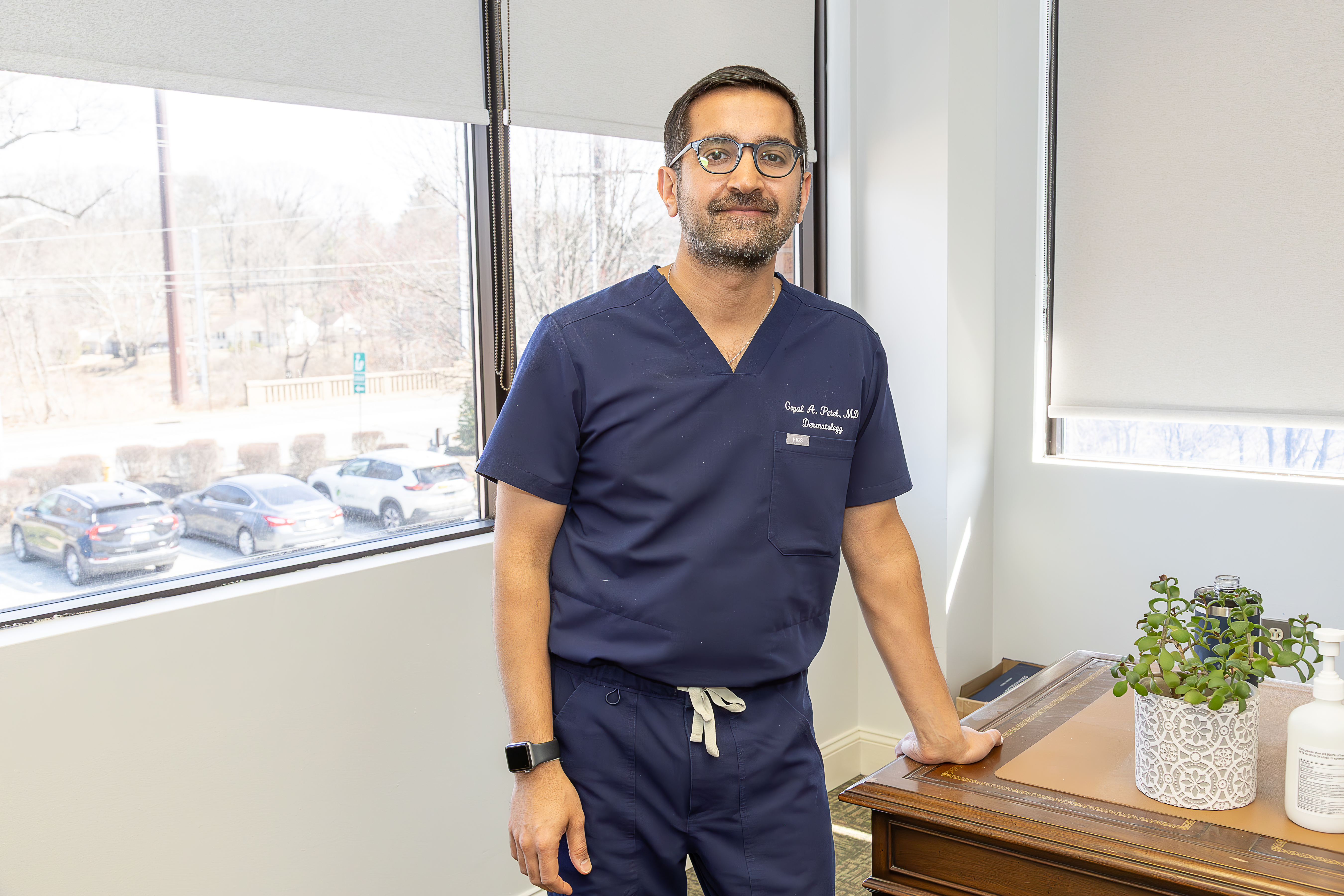
By Dr. Patel, Board-Certified Dermatologist – Aesthetic Dermatology Associates, serving Paoli & Media, PA.
Here’s the truth: currently there is no complete cure for psoriasis. However, there are numerous treatment options available, and they are often quite effective.
At Aesthetic Dermatology Associates, treatment is tailored to each patient’s specific situation. Here are the options that may be recommended:
1. Topical Therapies
These include agents that decrease inflammation and reduce flaking of the skin. Topical treatments are often the first line of defense, especially for mild to moderate psoriasis.
Common topical medications include:
- Corticosteroids (various strengths depending on location and severity)
- Vitamin D analogues (calcipotriene)
- Retinoids (tazarotene)
- Calcineurin inhibitors (tacrolimus, pimecrolimus)—especially useful for sensitive areas like the face
- Topical Small Molecule inhibitors
- Coal tar preparations
- Salicylic acid—helps remove scales
2. Injection of Steroid Medication
Dr. Patel explains:
“For stubborn plaques that aren’t responding to topical treatments, we can inject steroid medication right into the affected areas of skin. This delivers the anti-inflammatory effect of the steroid directly where it’s needed most. These injections cause minimal and temporary discomfort and are very quick.”
These intralesional injections are quick, performed in the office, and can be particularly effective for thick plaques on elbows, knees, or scalp.
3. Ultraviolet Light Therapy
Ultraviolet light has anti-inflammatory effects on the skin and can be highly effective for widespread or localized psoriasis.
Dr. Patel states:
“Photherapy is a really safe and effective way to treat psoriasis. It has a long history of effective use in dermatology for a variety of skin conditions. However, it requires consistency over a long period of time. At ADA we have full body treatment units along with localized phototherapy lasers for stubborn areas.”
Light therapy typically requires coming to the office 2-3 times per week initially, then tapering to maintenance sessions.
4. Oral Medications
For moderate to severe psoriasis, systemic medications, including oral medications, may be appropriate.
These may include:
- Traditional agents like methotrexate, which has been used for decades and works by suppressing the overactive immune response
- Newer agents like Otezla (apremilast), which works by inhibiting an enzyme involved in inflammation
These medications work through a variety of mechanisms to calm the immune system’s overactivity.
5. Biologic Medications
Dr. Patel notes:
“You’ve probably seen several ads online and on TV for many of these medications!”
These injectable medications represent some of the most significant advances in psoriasis treatment. Biologics work by blocking specific inflammatory chemicals in the body—targeting the exact immune pathways involved in psoriasis. They include drugs like:
- TNF-alpha inhibitors (Humira, Enbrel, Remicade)
- IL-17 inhibitors (Cosentyx, Taltz, Siliq, Bimzelx)
- IL-23 inhibitors (Skyrizi, Tremfya, Ilumya)
- IL-12/23 inhibitor (Stelara)
*all brands above copyrighted
These medications have transformed treatment for many patients with moderate to severe psoriasis, often achieving near-complete skin clearance.
Dr. Patel emphasizes:
“All medications have potential benefits, side effects, treatment schedules and risks. These will be reviewed with you by your provider so you can make an informed decision.”
I Feel Overwhelmed With All These Options—How Can I Make a Decision?

This is a common and completely understandable reaction. The good news is: you’re not making this decision alone.
Dr. Patel reassures patients:
“Our job at ADA is to work with you to come up with a plan that maximizes effectiveness while attempting to minimize risk. We’ll find the right approach for you!”
Some factors that may go into the decision of which therapy to try include:
- Your desire or willingness to apply topical medications on a regular basis
- Your schedule availability for light therapy (which requires multiple office visits per week)
- Your risk tolerance for side effects
- Your willingness to have small injections
- The severity and location of your psoriasis
- Other medical conditions you may have
- Medications you’re currently taking
- Your lifestyle and treatment preferences
- Cost and insurance coverage
Dr. Patel adds:
“Often topical therapies will be tried before anything else. However, for severe disease, a systemic medication or light therapy may be recommended right away.”
The approach taken depends entirely on your individual situation. There’s no one-size-fits-all answer—and that’s actually a good thing. It means treatment can be customized to fit your life, not force your life to fit around treatment.
What Your Dermatologist Wants You to Know About Living With Psoriasis
After treating hundreds of patients with psoriasis throughout his career—from his training at the University of Texas Southwestern to his work in the Philadelphia area—Dr. Patel has learned that successful psoriasis management is about partnership.
Here’s what every patient should understand:
Long-term management is absolutely possible. While there’s no cure, most patients will see significant improvement in their psoriasis by following a customized treatment protocol tailored for their specific needs. Many patients achieve months or even years of clear or nearly clear skin.
You’re not failing if you flare. Psoriasis is unpredictable. Even with perfect adherence to treatment, flares can happen. That doesn’t mean the treatment isn’t working or that you’ve done something wrong—it means the treatment plan may need adjustment.
Your mental health matters just as much as your skin. The psychological burden of psoriasis is real. The itching, the visible plaques, the impact on your social life and self-esteem—all of this affects your quality of life. If you’re struggling emotionally, tell your dermatologist. There are resources available, and addressing the emotional aspect is part of treating the whole person, not just the skin condition.
Consistency is key. One of the biggest challenges is when patients stop their treatment as soon as their skin clears. Psoriasis is a chronic condition. Maintaining your treatment—even when you’re doing well—helps prevent the next flare.
Dr. Patel emphasizes:
“Fortunately, as a patient of Aesthetic Dermatology Associates, we will be with you while making the decision of which therapies to try, and as you proceed with treatment. We will see you on a regular basis and we are always a phone call or a text away. If you change your mind about a particular therapy, we’ll work with you to find an acceptable alternative.”
You Don’t Have to Navigate This Alone
If you’re experiencing a psoriasis flare-up right now, the urgency you feel is completely understandable. You want relief, you want answers, and you want to know that someone understands what you’re going through.
That’s exactly what dermatologists are here for.
Psoriasis treatment has come incredibly far in recent years. The options available today—from advanced biologics to targeted light therapy—offer hope that wasn’t available even a decade ago. But the key is finding the right treatment combination for you, and then adjusting it as needed over time.
Dr. Patel concludes:
“Most patients will see significant improvement in their psoriasis by following a customized treatment protocol tailored for their specific needs.”
From first-time flare-ups to long-term management, expert dermatological care makes all the difference. Collaborating with the right team allows you to build a personalized treatment strategy that aligns with your daily routine, tackles your specific challenges, and delivers the clear, comfortable skin you’ve been seeking. Managing this condition shouldn’t mean sacrificing the life you want to live.
Arrange a Psoriasis Treatment Consultation in Paoli or Media, PA
Living with psoriasis means having a dermatology partner who understands your unique challenges and stays with you through every treatment decision. At Aesthetic Dermatology Associates, Dr. Altman and our experienced team offer:
- Comprehensive treatment options: From prescription topicals to cutting-edge biologics
- Same-week appointments: Priority scheduling available for severe flare-ups
- Personalized care plans: Tailored to your lifestyle, preferences, and treatment goals
- Ongoing support: Direct access to your care team when you need guidance
Conveniently serving patients in Paoli, PA and Media, PA
Don’t wait for your next flare-up to take action. Whether you’re newly diagnosed or seeking better management of long-standing psoriasis, we’re here to help.
About the Author

Dr. Patel is a board-certified dermatologist with advanced training in medical, surgical, and cosmetic dermatology. An Adjunct Associate Professor at the University of Pennsylvania Perelman School of Medicine in Philadelphia, he has authored peer-reviewed research and mentored future dermatologists.
At Aesthetic Dermatology Associates, Dr. Patel specializes in skin cancer diagnosis and treatment, medical dermatology, and patient education. He proudly serves the communities of Paoli, Media, and the greater Philadelphia Main Line area, providing compassionate, evidence-based dermatologic care.
Related links
See Dr. Patel’s personal page on our website
Follow Dr. Patel on LinkedIn professional social network
Review Dr. Patel’s rating on US News Health website
Visit Our Locations
Media, PA
| Mon: | 7:30 am - 5:30 pm |
| Tue: | 8:00 am - 4:00 pm |
| Wed: | 7:30 am - 4:00 pm |
| Thu: | 7:30 am - 4:00 pm |
| Fri: | 7:30 am - 1:00 pm |
Paoli, PA
| Mon: | 8:00 AM - 4:30 PM |
| Tue: | 8:00 AM - 4:00 PM |
| Wed: | 8:00 AM - 5:30 PM |
| Thu: | 8:00 AM - 4:30 PM |
| Fri: | 8:00 AM - 5:00 PM |
Stay Informed with our Newsletter

Book Your Appointment Today!
Choose the option that works best for you:
Prefer to speak with someone? Call or text us:

Media, PA Office - Call or Text (610) 566-7300
Paoli, PA Office - Call or Text (610) 647-4161
Want to book online now? Select a provider below:
Note: Self-scheduling is currently available for Dr. Ko & Bridget Lolli. For all other providers, please call or text the office.