Plaque Psoriasis: What Those Red Patches Mean (And Why There’s No Reason to Panic)
By Dr. Leib, Board-Certified Dermatologist – Aesthetic Dermatology Associates, serving Paoli & Media, PA
You noticed the first patch a few weeks ago. Maybe on your elbow, or your knee. Pink-red, slightly raised, with silvery-white scales on top. Your family doctor mentioned psoriasis, or maybe a friend recognized it from their own experience.
If you’re reading this because you suspect you have plaque psoriasis, you’re probably feeling anxious, confused, and maybe a little overwhelmed by everything you’re finding online. The good news is this: plaque psoriasis, while chronic, is manageable. Understanding what’s happening to your skin is the first step toward getting the right treatment and feeling more like yourself again.
Let’s start with the medical facts – explained in plain language.
What Is Plaque Psoriasis, Exactly?
Plaque psoriasis is a chronic inflammatory condition of the skin. Translation: it’s a long-term condition where your immune system causes inflammation.
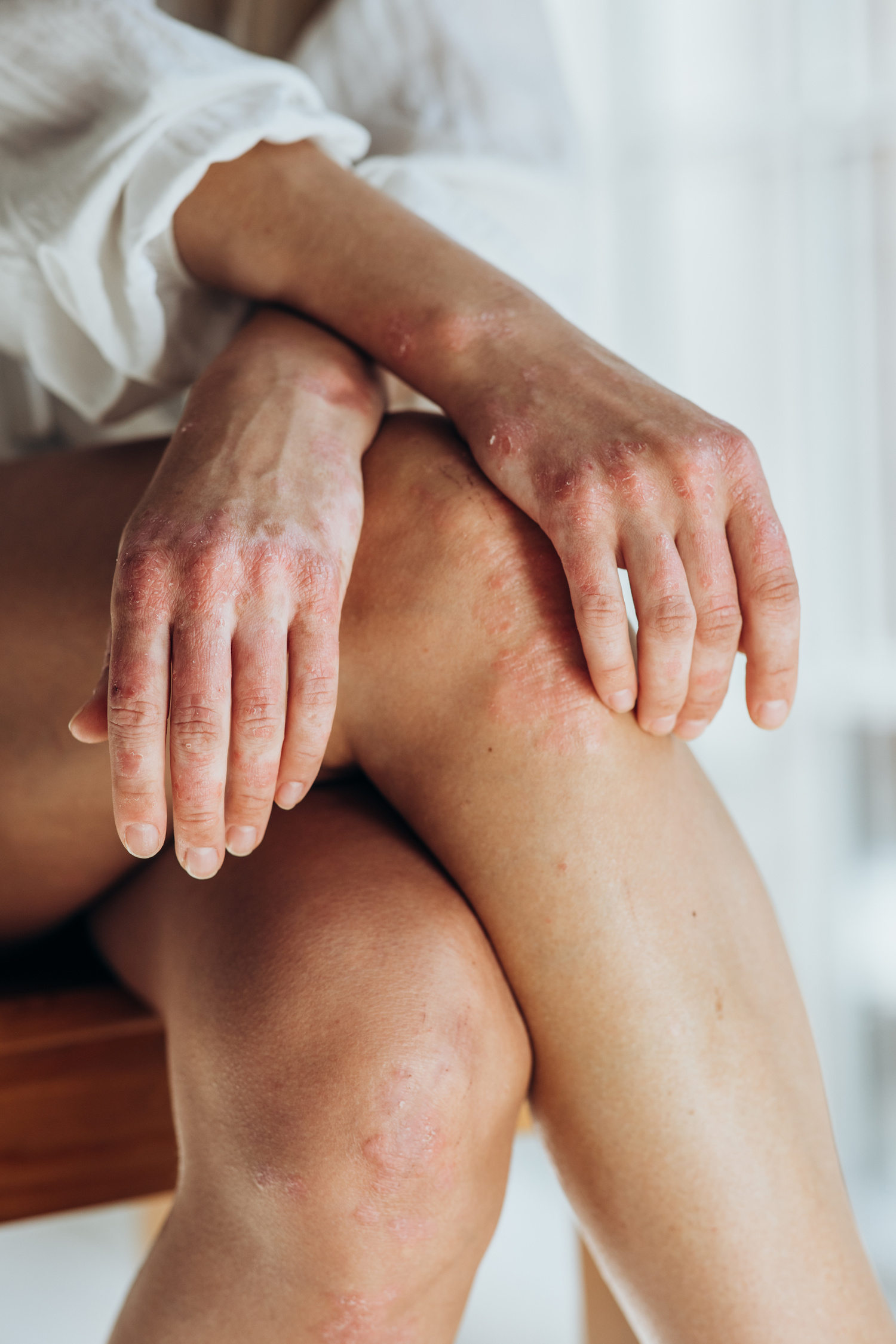
Those raised patches you’re seeing? Dermatologists call them “plaques.” They’re typically pink-red in color with whitish or silvery scales on top. They can appear almost anywhere on your body, but most commonly show up on:
- Knees and elbows (the most common spots)
- Scalp
- Lower back
- Underarms and groin
- Buttocks
- Nails (causing pitting, discoloration, or thickening)
Dr. Leib explains:
“When patients first come in with suspected psoriasis, one of the first things I tell them is: this is not something you caused. It’s not from poor hygiene, something you ate, or anything you did wrong. Plaque psoriasis is an immune-mediated condition – meaning your immune system is the driving force behind what you’re seeing on your skin.”
What Causes Plaque Psoriasis? The Real Answer
This is probably the question weighing most heavily on your mind right now. And here’s the honest answer: like so many medical conditions, the cause of psoriasis is complex. We generally cannot blame one particular thing.
The genetic component:
If you have plaque psoriasis, you have a genetic predisposition. This means you inherited genes that make your immune system more likely to behave this way. You might have family members with psoriasis, or you might be the first person in your family to develop it – both scenarios are common.
Having the genetic tendency doesn’t mean you’ll definitely develop psoriasis. But it does mean that under the right circumstances, your immune system can shift into this overactive state.
Environmental triggers:
Even with genetic susceptibility, something usually acts as a trigger – an environmental factor that essentially “activates” the condition. Common triggers include:
- Stress: Emotional or physical stress is one of the most significant triggers
- Trauma to the skin: Cuts, scrapes, sunburns, or even tattoos can trigger plaques to form at the injury site
- Infections: Strep throat and other infections can trigger psoriasis, especially in younger people
- New medications: Certain drugs, including lithium, beta-blockers, and some blood pressure medications, can trigger or worsen psoriasis
- Weather changes: Cold, dry weather often triggers flares
- Lifestyle factors: Smoking and heavy alcohol use can contribute to development and severity
Dr. Leib emphasizes:
“Many patients come in trying to figure out exactly what caused their psoriasis. While identifying triggers can be helpful for managing the condition, it’s important not to blame yourself. Sometimes we can identify a clear trigger, and sometimes we can’t. Either way, what matters most is moving forward with effective treatment.”
How Common Is Plaque Psoriasis?
You’re far from alone. About 2% of the world’s population is affected by psoriasis, though the frequency is thought to be higher in the United States. That’s millions of people living with this condition.
Psoriasis can occur at any age – from infancy to late adulthood. However, there are two peak times when people are most likely to develop it:
- Ages 20-30 (the most common time for first onset)
- Ages 50-60 (the second peak period)
If you’re being diagnosed in your twenties or thirties, you might feel frustrated that this is happening when you’re supposed to be at your healthiest. But this timing is actually completely typical for plaque psoriasis.
What Does Plaque Psoriasis Feel Like? Recognizing the Symptoms
Unlike eczema (another common inflammatory skin condition), plaque psoriasis tends to be only mildly itchy. Some people experience virtually no itching at all, while others find it bothersome but not severe.
The most common symptoms include:
- Dry, cracked skin
- Stinging or burning sensations, especially if the skin cracks or fissures
- Joint pain or stiffness (if psoriatic arthritis is developing)
A word about cracks and fissures:
Occasionally, psoriasis plaques can cause cracks or fissures in the skin. These can sting, burn, or become painful – especially in areas that bend or flex frequently. These cracks also create an opening for bacteria, which can lead to infections.
If you notice increased warmth, swelling, oozing, or fever alongside your psoriasis, contact your dermatologist right away – these could be signs of infection requiring prompt treatment.
The Psoriatic Arthritis Connection
Here’s something important to know: plaque psoriasis can be associated with psoriatic arthritis – a condition that causes painful inflammation in the joints.
Not everyone with plaque psoriasis will develop psoriatic arthritis, but the two conditions are connected. If you’re experiencing joint pain, stiffness (especially in the morning), or swelling alongside your skin symptoms, mention this to your dermatologist. Catching psoriatic arthritis early and treating it promptly can help prevent permanent joint damage.
Will Plaque Psoriasis Go Away on Its Own?
This is one of the most common questions newly diagnosed patients ask, and it’s important to be honest about the answer.
Even though symptoms aren’t necessarily severe, plaque psoriasis is very stubborn and usually does not go away without treatment. This is one of the key differences between psoriasis and other skin conditions.
Dr. Leib notes:
“I understand that hearing ‘chronic condition’ can feel discouraging. But here’s what that really means: psoriasis is something we manage, not something we cure. And the good news is that we have many, many effective treatment options available today. Although there is no cure for this condition, thankfully there are many treatments that can help minimize the appearance of the plaques and alleviate symptoms. Many of my patients achieve clear or nearly clear skin with the right treatment plan.”
What Happens Next: Your Path Forward
If you’re reading this because you suspect you have plaque psoriasis, the next step is to see a board-certified dermatologist who can:
- Confirm the diagnosis: While plaque psoriasis has characteristic features, other conditions can sometimes look similar. A dermatologist can examine your skin and, if needed, perform a simple biopsy to confirm the diagnosis.
- Assess the severity: Not all psoriasis is the same. Your dermatologist will evaluate how much of your body is affected and how the condition is impacting your quality of life.
- Create a personalized treatment plan: From prescription topical treatments to light therapy to advanced biologic medications, there are numerous options. Your treatment plan will be tailored to your specific situation, preferences, and lifestyle.
- Provide ongoing support: Psoriasis management is a partnership. Your dermatologist will work with you over time to adjust treatments as needed and help you identify and avoid your personal triggers.
You’re Not Alone in This
Finding out you have a chronic skin condition can feel isolating. You might worry about how it looks, whether it will get worse, or how it will affect your daily life.
But here’s what you need to know: plaque psoriasis is highly treatable. With the right dermatology partner and a treatment plan designed for you, most patients see significant improvement. Many achieve clear or nearly clear skin and regain the confidence that psoriasis initially took away.
This condition doesn’t have to define you or limit your life. Treatment works. Relief is possible. And you don’t have to figure this out alone.
About Dr. Leib
Dr. Leib is a board-certified dermatologist with extensive experience treating plaque psoriasis and other complex skin conditions in southeastern Pennsylvania. She served as chief resident during her dermatology training at Virginia Commonwealth University and has contributed to the field through peer-reviewed publications and presentations at regional dermatology conferences.
A Downingtown native and Penn State College of Medicine graduate, Dr. Leib is an active member of leading dermatology specialty societies. She is dedicated to patient-centered care, staying current with the latest treatment advances, and providing compassionate, expert guidance to every patient navigating their psoriasis journey.
Related links:
See Dr. Leib’s provider’s page on our website https://adaderm.com/providers/amy-leib-md/
Review 5-star rating given by patients https://share.google/wJjqWA8m5OvPfw6Hx
Schedule Your Plaque Psoriasis Consultation in Paoli or Media, PA
Understanding what’s happening to your skin is the first step. Getting expert care is the next.
At Aesthetic Dermatology Associates, Dr. Leib and our experienced team offer:
- Accurate diagnosis: Comprehensive evaluation to confirm plaque psoriasis and rule out other conditions
- Personalized treatment plans: Tailored to your lifestyle, severity, and treatment goals
- Full range of treatment options: From prescription topicals to advanced biologic therapies
- Compassionate, expert care: A dermatology partner who understands your concerns and guides you every step of the way
Conveniently serving patients in Paoli, PA and Media, PA
Don’t let uncertainty keep you from getting the care you need. Whether you’re newly diagnosed or seeking better management, we’re here to help you achieve clear, comfortable skin – and peace of mind.
Visit Our Locations
Media, PA
| Mon: | 7:30 am - 5:30 pm |
| Tue: | 8:00 am - 4:00 pm |
| Wed: | 7:30 am - 4:00 pm |
| Thu: | 7:30 am - 4:00 pm |
| Fri: | 7:30 am - 1:00 pm |
Paoli, PA
| Mon: | 8:00 AM - 4:30 PM |
| Tue: | 8:00 AM - 4:00 PM |
| Wed: | 8:00 AM - 5:30 PM |
| Thu: | 8:00 AM - 4:30 PM |
| Fri: | 8:00 AM - 5:00 PM |
Stay Informed with our Newsletter

Book Your Appointment Today!
Choose the option that works best for you:
Prefer to speak with someone? Call or text us:

Media, PA Office - Call or Text (610) 566-7300
Paoli, PA Office - Call or Text (610) 647-4161
Want to book online now? Select a provider below:
Note: Self-scheduling is currently available for Dr. Ko & Bridget Lolli. For all other providers, please call or text the office.