Eczema vs. Psoriasis: How to Tell Them Apart
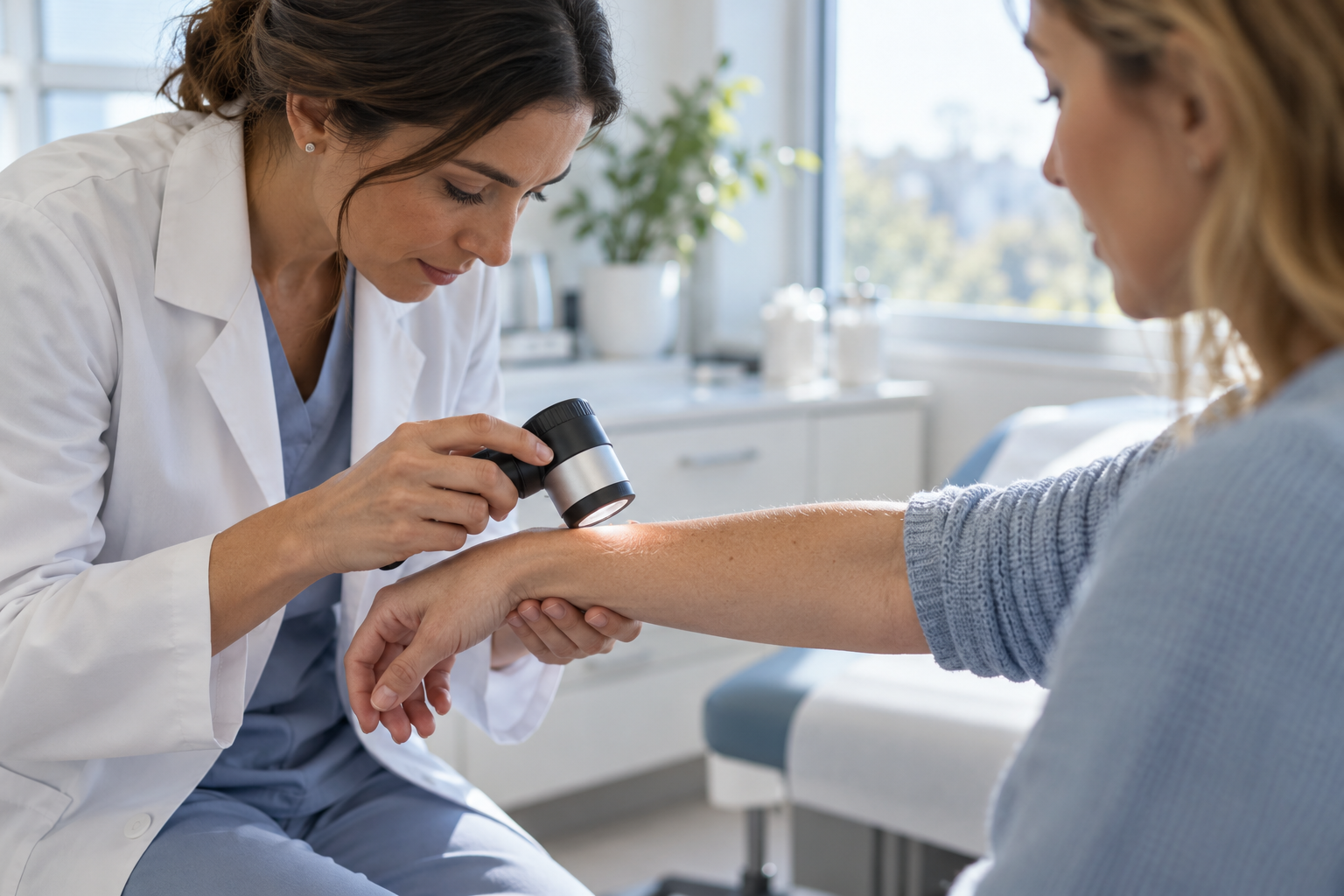
Patients walk into our office pointing at a patch of red, itchy skin and asking the same question: is this eczema or psoriasis? The confusion makes sense. Both conditions inflame the skin, both flare and fade over weeks or months, and both tend to show up in similar places on the body. Eczema and psoriasis come from different causes, though, and they respond to different treatments. Getting the right diagnosis changes what happens next, so our team at Aesthetic Dermatology Associates put together this guide to help you spot what separates one from the other.
What Is Eczema?
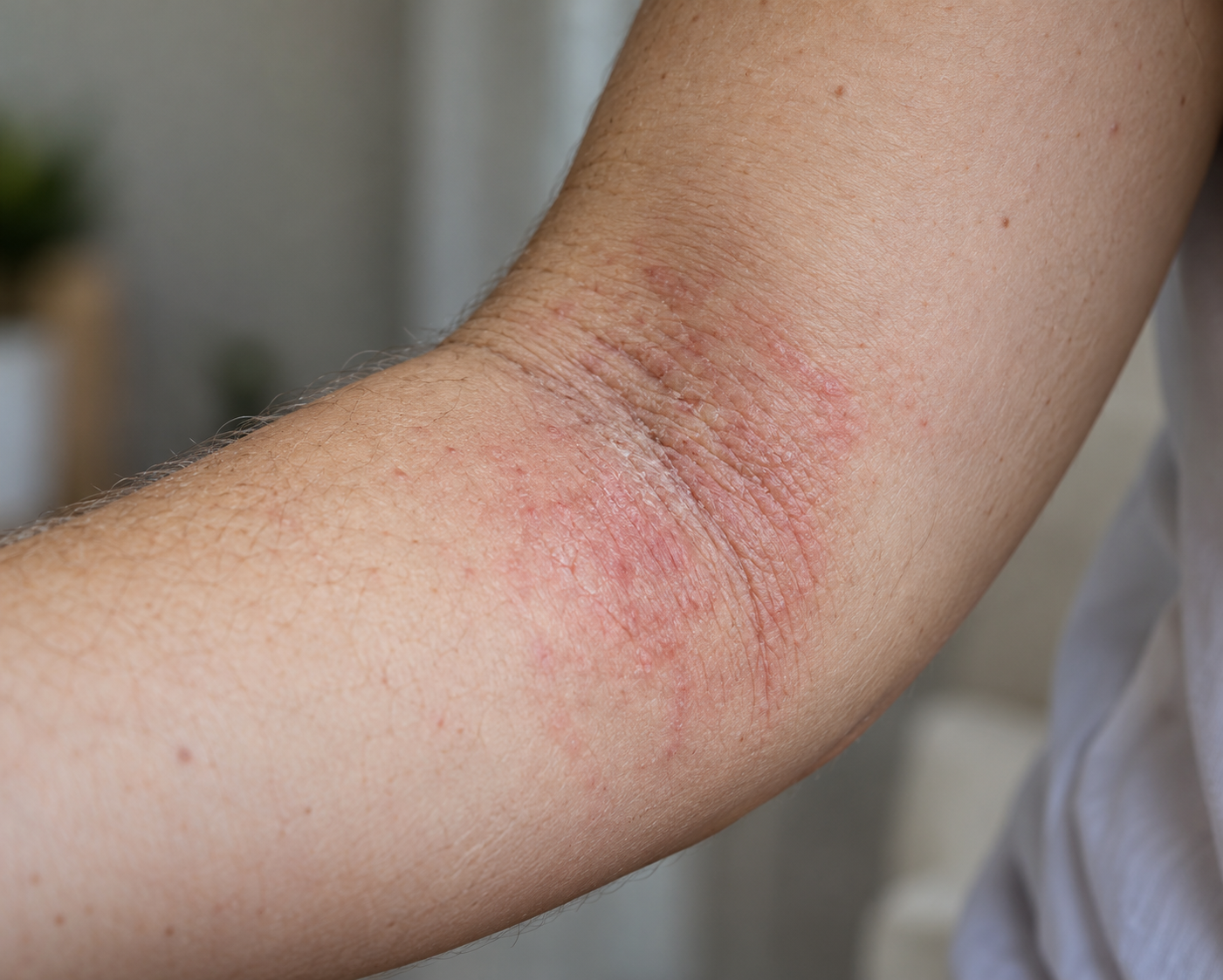
Eczema, also known as atopic dermatitis, is a chronic condition rooted in how the skin barrier functions. There are many possible causes of eczema including genetic, environmental, skin barrier, and immune factors. People with eczema typically have a weakened skin barrier which can leave the skin open to irritants, allergens, and bacteria. The condition tends to run in families alongside asthma and seasonal allergies, and it commonly starts in childhood, though adults develop it too.
Weather changes, harsh soaps, stress, and rough fabrics can all trigger a flare. Once the skin barrier breaks down, inflammation follows, and the itch-scratch cycle takes over: scratching damages the skin further, which intensifies the itch, which leads to more scratching.
Eczema Symptoms
- Red or brownish-gray patches, depending on skin tone
- Intense itching, sometimes arriving before any visible rash
- Dry, cracked, or scaly texture
- Thickened skin from repeated scratching
- Small, fluid-filled bumps that ooze or crust when scratched
Common locations include the creases of the elbows and knees, the neck, wrists, however it can flare anywhere on the body. In infants, eczema often appears on the cheeks and scalp instead. The itch usually arrives first, before the skin visibly changes.
What Is Psoriasis?
Psoriasis works through a different mechanism. It’s an autoimmune condition: the immune system speeds up skin cell production, pushing cells through a cycle that normally takes about a month down to a matter of days. That buildup creates the thick, scaly patches psoriasis is known for.
Genetics play a large role, and psoriasis often first appears in early adulthood, though it can start at any age. Infections, skin injury, cold weather, and stress can all trigger a flare. Psoriasis can also affect the joints in some patients, a related condition called psoriatic arthritis, something eczema does not do.
Psoriasis Symptoms
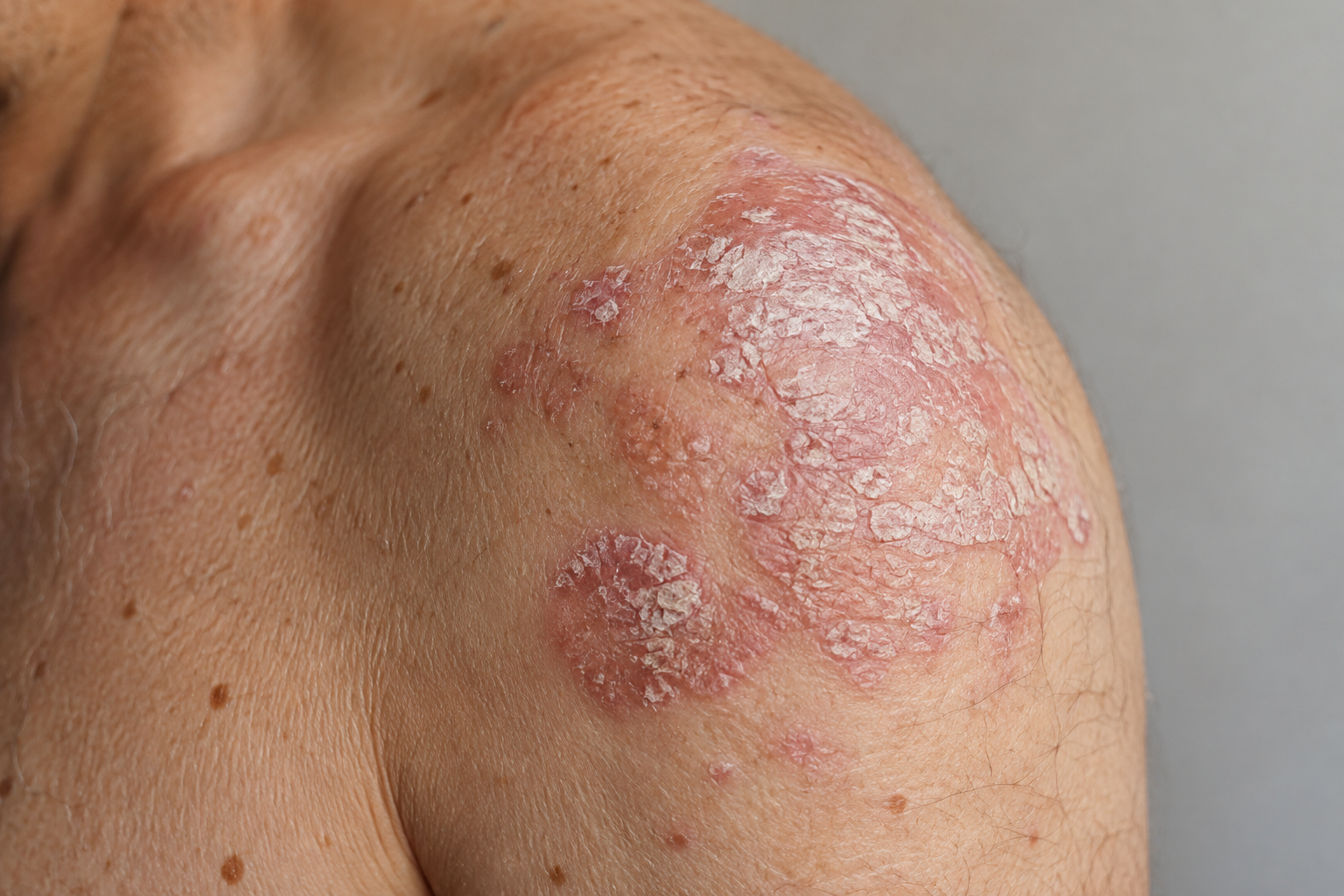
- Raised patches with well-defined edges, called plaques
- A silvery-white scale layered over red or darkened skin
- Itching, burning, or soreness, depending on the patient
- Pitted, thickened, or discolored nails
- Patches that often mirror each other on both sides of the body
Common locations include the scalp, elbows, knees, and lower back. The scale and the sharp border around each plaque are two of the clearest visual differences from eczema.
Psoriasis vs. Eczema: The Key Differences
| Eczema | Psoriasis | |
|---|---|---|
| Cause | Multifactorial, including skin barrier dysfunction | Autoimmune, overactive cell turnover |
| Texture | Dry, cracked, sometimes oozing | Thick, raised, scaly plaques |
| Border | Poorly defined, blends into surrounding skin | Sharp, well-defined edges |
| Primary sensation | Intense itch | Itch, burning, or soreness |
| Typical locations | Elbow and knee creases, neck, wrists | Outer elbows, knees, scalp, lower back |
| Age of onset | Often begins in childhood | Often begins in early adulthood |
| Symmetry | Less consistent | Frequently symmetrical |
Texture usually settles the question. Eczema looks raw and irritated, while psoriasis builds up into a scale you can see sitting on the skin’s surface. Location matters too: eczema favors the folds where skin touches skin, psoriasis favors the outer surfaces of joints.
Skin doesn’t always follow the textbook, though. Some patients show features of both conditions, or a case that doesn’t fit either description cleanly. This is why we always recommend getting an in-person exam and evaluation.
Psoriasis Treatment
Psoriasis treatment depends on how much of the body it covers and how the plaques respond to earlier approaches. Our team considers a few paths:
- Topical treatments applied directly to plaques, used for mild to moderate cases
- Phototherapy, where controlled light exposure slows the overactive skin cell cycle
- Systemic treatments, used when psoriasis covers a large area or hasn’t responded to topical care and phototherapy
Eczema management is more focused on repairing the skin barrier, avoiding known triggers, and calming inflammation during flares. The two conditions come from different mechanisms, that’s why confirming the diagnosis comes before choosing a treatment plan.
When to See a Dermatologist
A rash that won’t clear with basic moisturizing, one that spreads, or one that disrupts sleep or daily activity is worth a professional look. Eczema and psoriasis can resemble other skin conditions too, including fungal infections and allergic reactions, so a photo or an internet search only goes so far. A dermatologist examines the pattern, texture, and history of the rash, and can confirm a diagnosis with a biopsy when the picture isn’t clear.
If you’re dealing with a persistent rash and aren’t sure what you’re looking at, our team at Aesthetic Dermatology Associates can help you get a clear answer and a plan that fits your skin.
Visit Our Locations
Media, PA
Media, PA 19063
Phone hours may differ.
| Mon: | 7:30 am - 5:30 pm |
| Tue: | 7:30 am - 4:30 pm |
| Wed: | 7:30 am - 4:30 pm |
| Thu: | 7:30 am - 4:30 pm |
| Fri: | 7:30 am - 4:30 pm |
Paoli, PA
Paoli, PA 19301
Phone hours may differ.
| Mon: | 7:30 AM - 4:30 PM |
| Tue: | 7:30 AM - 4:00 PM |
| Wed: | 7:30 AM - 3:45 PM |
| Thu: | 7:30 AM - 4:30 PM |
| Fri: | 7:30 AM - 3:30 PM |
Stay Informed with our Newsletter

Book Your Appointment Today!
Choose the option that works best for you:
Prefer to speak with someone? Call or text us:

Media, PA Office - Call or Text (610) 566-7300
Paoli, PA Office - Call or Text (610) 566-7300
Want to book online now? Select a provider below:
Note: Self-scheduling is currently available for Dr. Goggins & Dr. Waller. For all other providers, please call or text the office.